
When Did Our Phones Become the Boss of Us?
I am sure you have had a similar experience when you have been out for dinner and noticed something quietly heartbreaking.
At the table next to us, four friends or a family sat together. Food arrived, drinks were poured… and within minutes every single person had picked up their phone.
Scroll. Tap. Scroll.
Someone laughed at something on their screen.
Someone else quickly checked a notification.
The strange thing? They were all physically together.
And yet… somewhere else entirely.
Most of us recognise this moment, not just to judge, but because we’ve been there and lived it. If we are honest it is not just the kids or teenagers that behave this way. We do too….
Our phones have become the tiny glowing centre of our lives. They wake us up, fill the gaps in our day, sit beside our beds, and quietly call to us whenever there’s a spare second.
And the pull is strong.
Not because we lack discipline.
Because these devices are designed to hook our attention.
But something important gets lost when every quiet moment is filled with scrolling.
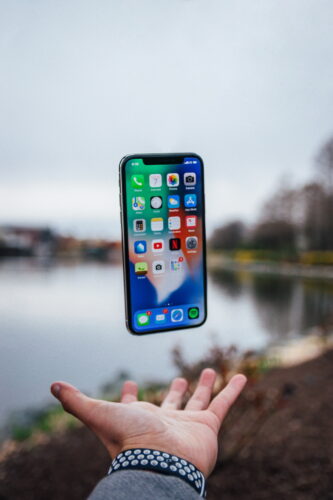
The Cost of Constant Connection
When our attention is always pulled outward, we lose something subtle but essential.
Space.
Space to notice how we actually feel.
Space to hear our own thoughts.
Space to truly connect with the person sitting in front of us.
When we constantly check messages or social media, a few things tend to happen:
- Conversations become half-present.
- Our minds stay in a state of low-level alert.
- We struggle to settle into deeper focus or rest.
- Real-life moments get interrupted by digital ones.
And then there’s the silent pressure many of us carry: the feeling that we must reply immediately.
A message comes in.
A WhatsApp notification appears.
An email lands.
And suddenly we feel the urge to respond right now – even if we’re in the middle of dinner, a conversation, or simply trying to relax.
But here’s the truth that’s easy to forget:
Very few messages are actually urgent.
The urgency lives mostly in our minds.
The Power of Stepping Away
When we put our phones down – even briefly – something shifts.
We start to notice things again.
The sound of someone laughing across the table.
The feeling of the sun on our skin.
The quiet (or noisy!) rhythm of our own thoughts.
We also give others something incredibly valuable: our full attention.
And full attention is becoming one of the rarest and most meaningful gifts we can offer.
Small Ways to Take Your Attention Back
Breaking the cycle doesn’t mean throwing your phone in the sea (tempting though that may be).
It’s about creating small boundaries that gently remind your brain: I am in charge here.
Here are a few simple ways to start.
1. Create Phone-Free Moments
Choose small windows of the day where your phone simply isn’t invited.
For example:
- Mealtimes
- The first 30 minutes of the morning (I cannot overemphasise the benefits of doing this!)
- The last hour before bed
- When meeting a friend for coffee (in our bags, not on the table)
- Having a day e.g. Sunday without social media
Even one protected moment a day can feel surprisingly freeing.
2. Move Your Phone Out of Reach
If your phone sits beside you, your brain will keep thinking about it.
Try leaving it:
- In another room
- In your bag
- Face down on silent
Out of sight genuinely helps reduce the urge to check.

3. Turn Off Non-Essential Notifications
Many of us are living in a constant state of interruption.
Ask yourself: Do I really need this notification?
Often the answer is no.
Keeping alerts only for truly important things can dramatically reduce the compulsive checking.
4. Pause Before You Pick It Up
The next time you reach for your phone automatically, pause for a moment and ask yourself:
Why am I picking this up right now?
Sometimes you’ll still choose to check it.
I have just installed the onesec app on my phone that asks me to take a deep breath when I go to check Facebook and then asks me again if I still want to.
Surprisingly powerful.
But often you’ll realise it was simply habit.
Awareness is the first step to changing that habit.
5. Replace the Scroll With Something Nourishing
Our brains crave stimulation, so simply removing the phone can leave a gap.
Instead try replacing the scroll with something small but grounding:
- Step outside for two minutes
- Stretch your body
- Make a cup of tea
- Look out of the window
- Take three slow breaths
Tiny resets like this calm the nervous system far more than endless scrolling ever will.

What do we notice?
When we do spend time away from our phones, our screens, it is also important to acknowledge what we notice.
How we feel in a conversation, in our minds, at the end of our days.
This simple acknowledgement can reinforce a behaviour we want to continue, develop, deepen.
We may noticed that we don´t feel quite so anxious, antsy, more regulated in our nervous system. This in turn can improve not only our own wellbeing and mental health, but our relationships, our quality of life. If we are feeling even a little bit calmer, then we are less likely to reach for the wine, chocolate, crisps, whatever which can create a whole other set of chain reactions and negative thought patterns for us too.
Time away from our screens, the news, comparison, social media, not only makes us more present it can lead to fewer other unhealthy behaviours too.
It is just important we recognise and notice and appreciate ourselves when we do it (we will then be way more likely to do it again).
Rewards can be intrinsic, we just need allow ourselves to really feel & acknowledge them.
Reclaiming Real Life
Phones are incredible tools. They connect us, inform us, and make life easier in countless ways.
But they were never meant to replace real presence.
The warmth of a conversation.
The presence of your own thoughts.
The feeling of truly being somewhere.
Those things still live off-screen.
And the beautiful thing is, they’re waiting for us the moment we look up.
What have you noticed about time away from your phone or screen? How have you gone about it or reinforced this behaviour? As always, I would love to hear your thoughts, queries, comments below…..
With love,
Emma

Images: Neil Soni, Marek Studzinski on Unsplash

The Power of Self-Care: 6 Benefits for Midlife Mums

Embracing the Complexities of Midlife: Insights from Midlife Women

Midlife and Not Settling
About The Author

Emma Thorne Lees
British, but living in Spain mum of 2 teens, a dog, lover of the outdoors, food, travel, exploring, connecting, learning. Sober, recovering overthinker, people pleaser, hyperachiever. Trying to remember to be kind and compassionate with myself as much as I am with others every day. Transformational life coach for midlife women empowering women to break free from overthinking, overwhelm, uncertainty to create clarity, connection and calm.