
The Waiting Room: How to Cope When You’re Waiting for Results You Can’t Control
For anyone with background noise running under their summer – waiting for A-level results, exam results, or any outcome that isn’t yours to decide
“You are smoking an awful lot.”
I remember those words from my best friend’s sister, said gently but pointedly, as we rattled along the train tracks through Northern Spain a few weeks after finishing our A-levels. I laughed it off – said we were just stressed, waiting on results a couple of weeks away. It wasn’t really an excuse. It was true. I don’t think I’d even admitted that to myself until I heard it out loud.
Thirty-odd years later, I’m sitting in a different kind of summer heat – this time in Spain as a resident, not a backpacker – waiting again. Except now it’s not my results. It’s my two teenagers’, due in a matter of weeks. And I recognise the exact same feeling rising in me that I felt in myself at eighteen: the waiting, the uncertainty, the sense of a future that isn’t in my control, the low hum of fear underneath an otherwise ordinary day.
If you’re in any version of this right now – waiting for A-level results day, watching your child navigate the run-up to it, or simply holding your breath over something entirely out of your hands – this is for you.

Why the waiting is often worse than the news itself
There’s a particular kind of tiredness that comes from half-living in a future date. You’re technically present – enjoying the summer, the World Cup on in the background, family meals when everyone’s schedules align – but part of your mind is already in August, running scenarios: What if it doesn’t go to plan? What’s the back-up? Should I say something, or will that make it worse?
This isn’t overthinking for the sake of it. It’s what uncertainty does to us. Our minds don’t like open loops, so they keep circling, trying to solve something that literally cannot be solved yet. The result day, whenever it lands, will bring relief simply because it ends the not-knowing – regardless of what it says.
Knowing this doesn’t make the feeling disappear. But it can take some of the shame out of it. If you’re distracted, tense, or find yourself reaching for a habit you thought you’d left behind – you’re not failing at handling this. You’re a person in a waiting room, and waiting rooms are uncomfortable by design.
The invisible weight parents carry
If your own results are years behind you but your child’s are imminent, the waiting has a second layer. You’re not just managing your own uncertainty – you’re carrying hopes and fears for someone else’s future while trying not to let them see the weight of it.
It can feel like a strange kind of juggling act:
- Wanting to check in, but not wanting to make every conversation feel like an assessment
- Noticing shifts in their mood – more scrolling, more irritability, more socialising than usual – and not being sure whether it’s the exam wait or just being a teenager in summer
- Watching Facebook groups fill up with clearing advice and back-up plans, and feeling the pull to plan ahead before you’re even in results week
- Wanting to protect their carefree summer while also being unable to fully switch off yourself
None of this makes you an anxious parent. It makes you a parent who loves someone whose future, for now, isn’t yours to determine.
Signs you’re sitting in “the waiting room”
You might recognise some of these in yourself, whatever the specific uncertainty is:
- A low-level tension maybe in your jaw, stomach or shoulders that you can’t quite trace back to one thing
- Checking news, group chats, or your phone more than usual – for something you know won’t have changed
- Reaching for old habits (a drink, a cigarette, doom-scrolling, over-snacking) more than you’d normally admit
- Feeling a pull toward controlling what you can – over-planning, over-researching, over-communicating – because you can’t control what matters most
- Filling your time, keeping super busy all the time
- A quieter loop underneath it all of guilt, shame, or judgment (“I should be handling this better”)
None of these are verdicts on your character. They’re clues – information about what’s really going on underneath, worth meeting with curiosity rather than judgment.
What actually helps while you wait
There’s no trick that removes uncertainty. But there are things that make it more bearable to sit inside – small anchors that keep you steady rather than buffeted by every mood swing, headline, or group chat update. What’s helped me:
- Starting the day before the phone does. Even ten minutes of leading your own morning before the world’s noise gets in changes the tone of the whole day.
- A few minutes of quiet. Meditation, breathwork (even noticing your breath), journalling or simply sitting with a hot drink before anyone else is up – whatever version of stillness actually works for you, not the one you think you “should” do.
- Slow, gentle movement. For me it’s swimming stretching (and sometimes dancing!) It doesn’t need to be intense; it needs to get you out of your head and into your body.
- Protecting some shared time. A shared meal, a match on in the background, anything that isn’t about the wait – a reminder that life is still happening alongside the uncertainty, not paused because of it.
- Getting curious. Noticing if you are reaching more for old habits or in unhealthy thought patterns. Noticing or awarenesss is the first thing that helps us disrupt and ultimately break the pattern. It also can help us bring some compassion to ourselves if we allow ourselves to acknowledge our emotions, whether it be fear, stress, tenderness, hope.
- Naming what’s actually yours to hold. This is the one that matters most, so it gets its own section below.

Life is not usually a straight line, for anyone.
Remember what’s yours to hold, and what’s theirs
If there’s one reframe worth taking from all of this, it’s this line, which I keep coming back to: remembering what is mine to hold, and what is theirs.
Their result, their next steps, their feelings about it – that’s theirs. Your job isn’t to solve it, pre-empt it, or manage it on their behalf. It’s to be the steady one they can come back to. You can hold space for their uncertainty without absorbing it as your own crisis to fix.
That distinction – what’s mine, what’s not mine – is useful for far more than exam results. It applies just as much to waiting on medical results, a job decision, a visa application, or any outcome where someone else, or simply time, holds the answer and you don’t.
This isn’t only about exam results
Whatever you’re waiting on right now – a results day, a diagnosis, a decision that rests with someone else entirely or simply what is unfolding in our world (sorry to bring that up!) – the underlying experience is the same: an invisible weight, a mind that keeps drifting to a date in the future, and a body that holds tension you can’t always name.
You don’t need to have it all handled. You need to notice what’s really going on underneath, be a little curious and compassionate with yourself about it and find the small things that keep you anchored while you wait for what’s genuinely out of your control to resolve itself. A useful question I was recently posed was “What can I do about it?” Sometimes that is to simply be with it all, others is to take action. Sometimes we just have to sit with the discomfort and make room for it until the answers unfold.
Are you feeling it too? I would love to hear in the comments below if you´d like to share what helps support you navigate uncertainty and change, whether it is for yourself, your child/ren, loved ones.
As always, take good care of you.
Emma

Fresh Season, Fresh Habits: Secrets on How to Create Routines That Actually Stick
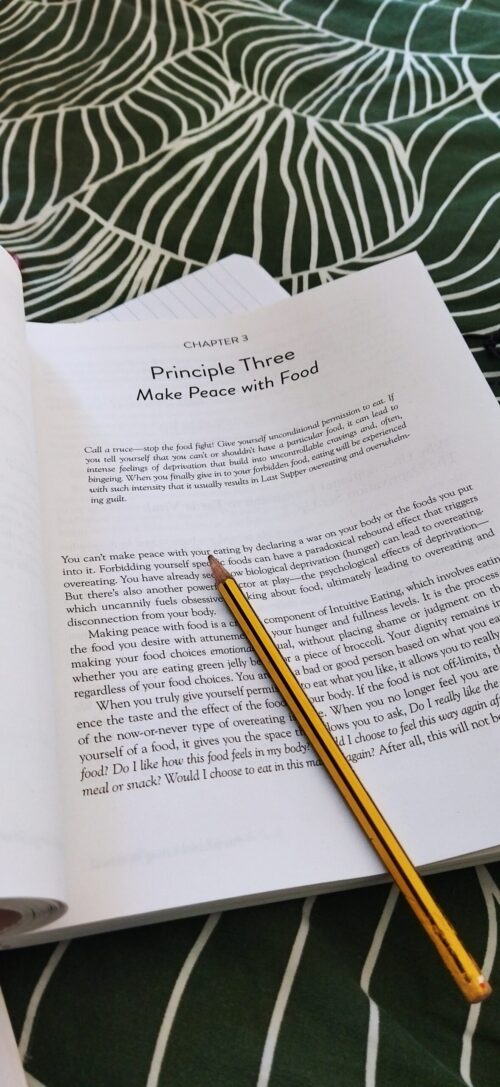
Intuitive Eating – Making Peace with Food Review

Coming home to me as a midlife expat
About The Author

Emma Thorne Lees
British, but living in Spain mum of 2 teens, a dog, lover of the outdoors, food, travel, exploring, connecting, learning. Sober, recovering overthinker, people pleaser, hyperachiever. Trying to remember to be kind and compassionate with myself as much as I am with others every day. Transformational life coach for midlife women empowering women to break free from overthinking, overwhelm, uncertainty to create clarity, connection and calm.